How to Potty Train a Basset Hound Puppy
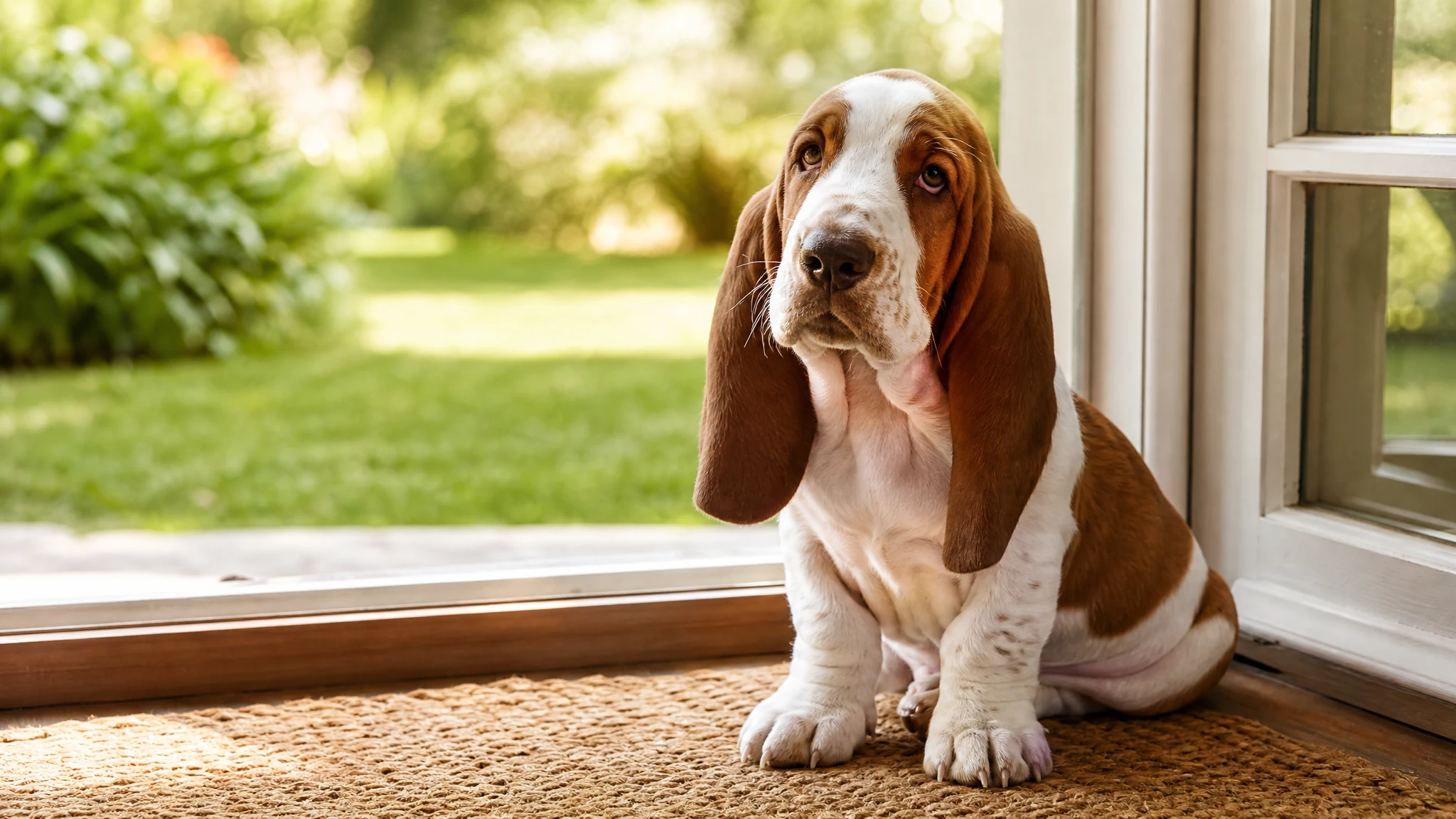
General training information. Every dog is an individual; for health or behavior concerns, see your veterinarian.
A Basset Hound puppy is hard to stay mad at. The long ears, the droopy eyes and the slow, rolling walk make it easy to forgive a puddle on the rug. Still, learning how to potty train a Basset Hound early will save your floors and your patience.
This guide walks through basset hound potty training one step at a time. It covers a schedule, crate use, handling accidents without punishment, and what is realistic given how this breed thinks.
Why house training a Basset Hound takes a plan
Hill's Pet Nutrition describes the Basset Hound as not easy to train and somewhat stubborn. Vetstreet calls the breed good-natured and independent, and says these dogs are ruled by the nose. The Basset Hound Club of America, the AKC parent club, notes that Bassets are independent thinkers who still do well in Obedience, Rally and Agility.
That mix matters for potty training. Your puppy is not being spiteful when they wander off to sniff instead of going. They were bred to follow scent trails for hunting small game such as rabbit and hare, according to the breed club. A yard full of interesting smells can easily outrank the job you brought them out to do.
The good news is that Vetstreet says positive reinforcement works well, helped by the breed's strong food motivation. Individual dogs vary, but food rewards give you a strong tool.
What you need before the puppy comes home
- A crate that is big enough for the puppy to stand, turn around and lie down in, and not much bigger. A Basset Hound is low to the ground but long and heavy-boned, so plan for the size of the adult dog.
- A leash and a flat or back-clip harness or a regular flat collar. Skip any prong, choke or shock device. They have no place in house training.
- Small, soft treats that your puppy loves. Cut them tiny so the rewards do not add up.
- An enzyme-based cleaner made for pet accidents, so the scent does not pull the puppy back to the same spot.
- A designated potty spot outside, ideally close to the door.
- A notebook or phone note to track meals, naps, potty trips and accidents.
- A fence or a secure leash. Orvis says Bassets must be leashed or fenced because of the urge to follow scents.
Step-by-step: how to potty train a Basset Hound puppy
Step 1: Start the day the puppy comes home
Vetstreet advises starting training the day the puppy comes home rather than waiting until the dog is six months old. Habits form fast, and a puppy who spends weeks going wherever they like will need more time to unlearn it.
Set the rules for everyone in the house on day one. Decide on the door you will use, the spot you will visit and the word you will say. Consistency matters a lot with a breed that has an independent streak.
Step 2: Build a predictable schedule
Puppies do best when the day has a rhythm. The exact timing depends on your puppy's age and your vet's advice, because no breed source in this research gives a Basset Hound bladder timeline. Ask your veterinarian how often a puppy of your dog's age should go out.
In general, take your puppy to the potty spot at these times:
- First thing in the morning, before anything else.
- Right after every meal.
- After waking from any nap.
- After play or excited greetings.
- Before bed, and again if the puppy wakes at night.
- Any time they start circling, sniffing the floor hard or heading for a corner.
Feed meals at set times too. A regular feeding schedule makes potty times easier to predict. Keep water available, but ask your vet about timing for the evening.
Step 3: Use the leash and go out with your puppy
Always walk your puppy to the spot on a leash, even in a fenced yard. A scent hound can lose the plot the moment the nose goes down. A leash lets you guide them back to the task.
Stand still and stay boring. Use the same phrase each time, such as "go potty," in a calm voice. Give the puppy a minute or two to sniff and settle. Then wait.
If nothing happens, go back inside and put the puppy in the crate or hold them in a small, watched area for a few minutes. Try again soon. This keeps a missed trip from turning into an indoor puddle.
Step 4: Reward right away
The moment your puppy finishes, praise in a happy voice and hand over a treat. Do it while they are still at the spot, not after you walk back to the house. Timing is everything, because the puppy needs to link the reward with going outside.
Because the breed is food motivated, a tasty treat often does the trick. Keep an eye on the total, though. Hill's lists obesity as a concern for the breed, so count training treats as part of the day's food and keep them small. Your vet can tell you how to adjust meals.
Step 5: Use the crate as a calm resting place
A crate can help with house training because most puppies do not want to soil the place where they sleep. Make it comfortable, not a punishment. Toss in a chew toy, feed a few meals in there and let the puppy walk in on their own.
Use the crate for naps and for short periods when you cannot watch the puppy. When the puppy comes out, go straight to the potty spot. Do not leave a puppy crated for longer than they can hold it. Ask your vet what is reasonable at each age.
Orvis notes that the breed may howl when left alone too long. If crating leads to loud protest, shorten the time and build up slowly. Never let a puppy cry it out for hours, and do not use the crate as a place to send them in anger.
Step 6: Supervise indoors
When the puppy is out of the crate, keep them in sight. A leash tied to your belt, a baby gate or a small play area can help. Most accidents happen when no one is watching.
Watch for early signs: sniffing the floor, circling, whining or suddenly walking away. Calmly pick the puppy up or lead them out on the leash, then reward if they go outside.
Step 7: Handle accidents without punishment
Accidents are part of the process. When you find one, stay calm. Clean it up with an enzyme cleaner and think about what went wrong. Maybe the gap between trips was too long, or the puppy was left unwatched.
If you catch the puppy in the act, interrupt with a cheerful "oops," pick them up or lead them out, and finish outside. Reward if they continue there.
Never yell, rub a nose in a mess or hit. The American Veterinary Society of Animal Behavior (AVSAB) supports reward-based training and warns that punishment can increase fear and anxiety. A scared puppy may simply learn to hide when they need to go, which makes training harder.
Step 8: Stretch the time between trips slowly
Once your puppy has a stretch of accident-free days, give a little more freedom a bit at a time. Open up one more room, or lengthen the gap between trips slightly. If accidents return, step back to the earlier routine for a while.
Keep rewarding outdoor potty trips for longer than you think you need to. With an independent breed, an occasional treat helps keep the habit strong.
Tips for a scent-driven, independent puppy
- Pick a low-distraction spot. The strongest smells in the yard can pull a puppy away from the task. A quiet corner may help.
- Play after, not before. Make sniffing and exploring the reward for going. Potty first, then fun.
- Keep sessions short and upbeat. Hill's calls the breed somewhat stubborn, so patience pays off more than pressure.
- Walk daily. Hill's suggests a good long walk at least once a day, and Orvis suggests two to three short walks plus easy play. Walks give extra chances to practice, but avoid long, hard runs for a young dog and ask your vet about safe exercise.
- Keep the whole family on the same plan. Mixed signals slow things down for any dog.
- Use a consistent cue word. Repeat it only once or twice, then wait quietly.
Common mistakes to avoid
- Waiting to start. Vetstreet says to begin on day one.
- Letting the puppy off leash to "go on their own." A nose-led breed may wander and forget the purpose, and Orvis says they need to be leashed or fenced.
- Rewarding late. A treat given back at the door teaches the puppy nothing about the spot.
- Scolding after the fact. A puppy cannot connect a puddle from five minutes ago with your reaction now.
- Skipping cleanup. Leftover scent invites repeat accidents, and a Basset's nose is excellent.
- Giving too much freedom too soon. Move up in small steps.
- Overfeeding treats. Extra weight is a known concern for the breed, according to Hill's.
How long does it usually take?
None of the breed sources used for this article give a set timeline for house training a Basset Hound, so any number would be a guess. Hill's describes the breed as not easy to train, which suggests you should plan for patience rather than a quick win.
Many owners find that steady routines, frequent trips and good rewards lead to fewer accidents over time, but results vary with age, health, routine and the individual dog. Some puppies catch on in a few weeks, while others take longer and have setbacks along the way. That is normal, and it does not mean you are doing it wrong.
When to call your veterinarian
If your puppy has frequent accidents despite a good routine, strains, seems to be in discomfort, drinks much more than usual or has sudden changes in house habits, check in with a veterinarian. Medical causes can look like a training problem, and only a vet can sort that out.
What to expect
If you stick with a schedule, reward outdoor success and keep accidents low-drama, your Basset Hound puppy may start to show a clear pattern within the first weeks. You might see them head to the door, pause at the spot or settle faster once outside.
Expect some slow days. The UKC describes the breed as friendly and affectionate, and Vetstreet calls them good-natured. That easygoing nature, combined with food motivation, can work in your favor when you keep sessions kind and clear. No method works the same for every dog, so adjust to your puppy and ask your vet or a certified, reward-based trainer if you get stuck.
Quick recap
- Start on day one.
- Set a predictable feeding and potty schedule, checking timing with your vet.
- Take your puppy to the same spot on a leash.
- Reward right away with a small treat.
- Use a comfortable crate for rest and short, supervised breaks.
- Watch your puppy indoors.
- Clean accidents calmly and skip punishment.
- Add freedom slowly.