Basset Hound Sports and Jobs: Putting the Breed's Instincts to Work
General training information. Every dog is an individual; for health or behavior concerns, see your veterinarian.
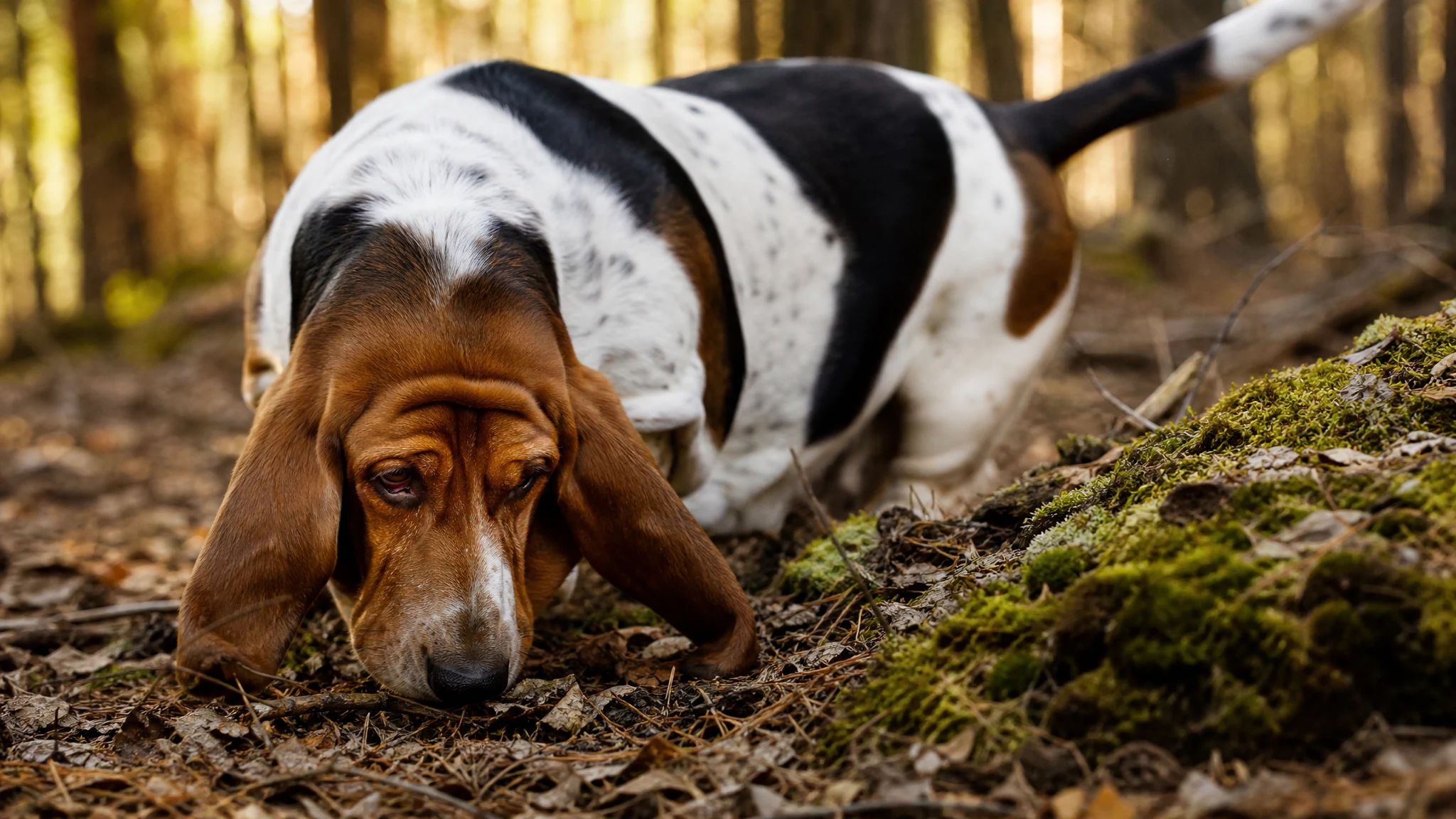
A Basset Hound on a good scent is a dog fully at work. The nose goes down, the tail goes up, and the rest of the world stops existing. If you have ever lost a walk to a single patch of grass, you have seen the talent this guide is about.
Basset Hound sports and jobs give that talent a place to go. This guide walks you through choosing an activity, getting ready, and taking the first steps. It also covers what tends to go wrong, because this breed is honest about what it will and will not do for you.
Why the Breed Suits Work
The Basset Hound Club of America (BHCA), the breed's parent club, says the breed goes back to France and was developed to hunt small game such as rabbit and hare by scent. Packs of Bassets drove prey out of dense cover for hunters on foot. The club's history page notes that sources disagree on exactly when the breed began, so treat any single date with caution.
That history explains a lot. A Basset Hound working dog was bred to follow a trail, keep going, and think for itself while the hunter was some distance behind. Hill's Pet Nutrition calls the breed somewhat stubborn and not easy to train. The BHCA describes Bassets as independent thinkers who still do well in Obedience, Rally and Agility.
Individual dogs vary. Some Bassets will love a sport and some will shrug at it. Use the breed information as a starting point, then let your own dog tell you what it enjoys.
The Sports and Jobs the Breed Club Lists
The BHCA's page on Bassets lists these activities for the breed: Conformation, Field Trials, Hunt Performance Tests, Tracking, Obedience, Rally, Agility and Therapy Dog work. Here is what each one is and why it may suit a Basset.
Tracking
In tracking, a dog follows a scent trail and shows the handler where it leads. This is the closest match to what the breed was built for. Orvis notes that Bassets must be leashed or fenced because of the urge to follow scents, so a sport that gives that urge a legal outlet makes sense.
Hunt Performance Tests and Field Trials
These events test hunting ability. The BHCA lists both for the breed, and they sit closest to the dog's original purpose of working game by scent. If you do not hunt, you can still learn about them through the club and watch before you decide.
Obedience and Rally
Obedience tests how well a dog performs set exercises with its handler. Rally has the team move through a course of signed stations. Both reward steady, patient teamwork, and both let a food-motivated dog earn plenty of treats along the way.
Agility
Agility sends a dog through a timed obstacle course. The BHCA lists it among the sports Bassets do well in. Because Hill's describes the breed as not built for daily running, start slowly and ask your veterinarian whether your dog is ready for jumping or climbing work.
Conformation
Conformation is a show in which judges compare dogs to the breed standard. The BHCA notes that the club's standard has been unchanged since 1964. It is a good fit for owners who enjoy the breed itself as much as the activity.
Therapy Dog Work
Therapy work means visiting people, with a trained and well-mannered dog. The UKC describes the breed as friendly and affectionate, and never aggressive or timid. Whether your own dog enjoys crowds, noise and strangers is something you will have to find out one visit at a time.
What You Need Before You Start
- A well-fitted flat collar or harness, and a regular leash. Choose gear that does not hurt the dog.
- A long line for scent work, so your dog has room to follow a trail while you stay connected.
- Small, soft treats your dog loves. PetMD, as quoted by Vetstreet, points to the breed's strong food motivation, so use it.
- A treat pouch, so rewards come quickly.
- Water and a shaded place to rest during practice.
- A notebook to record what your dog enjoyed and where it lost interest.
- A fenced area or a quiet field for practice, since the breed's scent drive makes off-leash practice risky.
- Your veterinarian's go-ahead before you begin a new physical activity.
Step-by-Step: Finding and Starting a Job for Your Basset Hound
Step 1: Get the Basics in Place
Every sport sits on top of everyday manners. Vetstreet says to begin training the day a puppy comes home rather than waiting until six months, and to stay consistent and patient. If your dog does not yet have a reliable sit, recall and loose-leash walk, start with the complete Basset Hound training guide and come back here.
Step 2: Check Your Dog's Fitness
Talk to your veterinarian before you start. Ask whether your dog's weight, joints and general health suit the activity you have in mind. Hill's lists obesity among the breed's challenges, and extra weight makes every sport harder. Do not guess about health. Your vet is the right person to ask.
Step 3: Match the Activity to Your Dog
Watch how your dog spends a free hour. A dog that lives with its nose down may love tracking. A dog that watches your face and works for treats may enjoy Rally or Obedience. A calm, friendly dog that loves people may be a candidate for therapy work. Pick one activity to try first, not three.
Step 4: Try a Scent Game at Home
This is the easiest way to see how your dog responds to nose work. Let your dog watch you drop a few treats in short grass, then release it to find them. Next, hide treats where it cannot see you place them. Praise as it finds each one.
- Start with treats that are easy to find.
- Make each hide a little harder over several sessions.
- End while your dog is still keen.
Keep sessions short. Orvis suggests two to three 20-minute walks a day plus easy play for the breed, so a few minutes of focused scent work fits well into that routine.
Step 5: Build Focus Around Distractions
Every sport asks your dog to work while the world is full of smells. Practice a few simple behaviors in new places, rewarding your dog each time it looks back at you. Start where it is easy, such as a quiet driveway, then move to a park edge. Raise the difficulty only when your dog succeeds.
Step 6: Find a Local Club or Class
This is where you turn the idea into action. Look for these in general terms:
- Local dog training clubs that offer beginner classes in Obedience, Rally or Agility.
- Breed clubs and hound clubs that hold tracking, hunt test or field events. The Basset Hound Club of America is a good place to start asking.
- Organizations that evaluate dogs for therapy work. Ask each one what it requires.
Rules, fees, eligibility and event dates change, and this article does not list them. Check directly with the American Kennel Club, the United Kennel Club, the BHCA and your local club for the current requirements. Ask whether you can watch a class or event first, because seeing one in person tells you a lot.
Step 7: Take a Beginner Class
Choose an instructor who uses reward-based methods. The American Veterinary Society of Animal Behavior supports reward-based training, and a good class will not use shock, prong or choke collars, or physical corrections. If you see those, leave. Tell the instructor about the breed's independent streak so they can plan around it.
Step 8: Practice in Short, Happy Sessions
Five to ten minutes of practice, a few times a week, is usually better than one long session. Stop while the dog is still interested. A Basset that is bored, hot or tired will simply switch off, and no amount of repeating the cue will change that.
Step 9: Enter an Event Only When You Are Both Ready
Entering a trial or test is optional. Many owners enjoy classes and practice for years without competing. If you do decide to enter, pick a beginner level and treat the first run as practice. Keep your expectations modest and your treats plentiful.
Tips for Working With a Hound's Mind
- Use the nose as the reward. Letting your dog sniff after a correct response can be as motivating as a treat.
- Pay quickly. A stubborn dog stays engaged when rewards arrive fast and often.
- Keep the line on. Orvis says the breed must be leashed or fenced. A long line gives freedom without risk.
- Plan for weather. Work in cool parts of the day and offer water often.
- Celebrate small wins. A slow, thoughtful Basset can still do very well in sports the breed club names.
Common Mistakes to Avoid
- Calling it stubbornness when it is scent. A dog that does not respond with its nose in a smell field is not being rude. It is being a hound. Move to an easier setting.
- Letting the dog off leash in an open area. The scent drive can carry it a long way before it notices you are gone.
- Skipping the basics. Sports cannot fix missing manners.
- Using force. Harsh methods damage trust. Rely on rewards and patience.
- Overdoing it. Hill's says the breed needs a good long walk at least once daily, but is not built for daily running. Build up slowly.
- Ignoring weight. Obesity is a named challenge for the breed. Ask your vet how to feed an active dog, and do not add supplements or treats in bulk on your own.
- Expecting the howl to stop. Orvis calls the breed a loud howler. Excitement at a class or event may bring out the voice, so warn your instructor and neighbors.
What You Can Reasonably Expect
Results vary from dog to dog, and no one can promise an outcome. With regular, reward-based practice, many owners find that their Basset becomes more focused on them, more settled at home, and more willing to work in new places. Scent games may also give a bored dog a satisfying outlet.
Progress is often slow and uneven. You may have days when your dog sniffs one blade of grass for ten minutes and refuses everything else. That is normal for the breed. Look at the trend over weeks rather than a single bad session.
If your dog does not take to one activity, try another from the BHCA's list. The point is to give a hound a job it enjoys, not to collect ribbons.